How can foresight help European University Alliances navigate uncertainty and imagine their future? ERUA brought its experience to the Futures4Europe Conference 2026, “Daring to imagine otherwise”, held in Rome on 30 September and 1 October.
The Futures4Europe Conference 2026 brought together foresight practitioners, researchers, policy experts and other future-oriented thinkers to explore the role of imagination in understanding and shaping possible futures. Under the theme “Daring to imagine otherwise”, this year’s edition focused on how foresight can challenge established assumptions, open up alternative possibilities and inform action and decision-making.
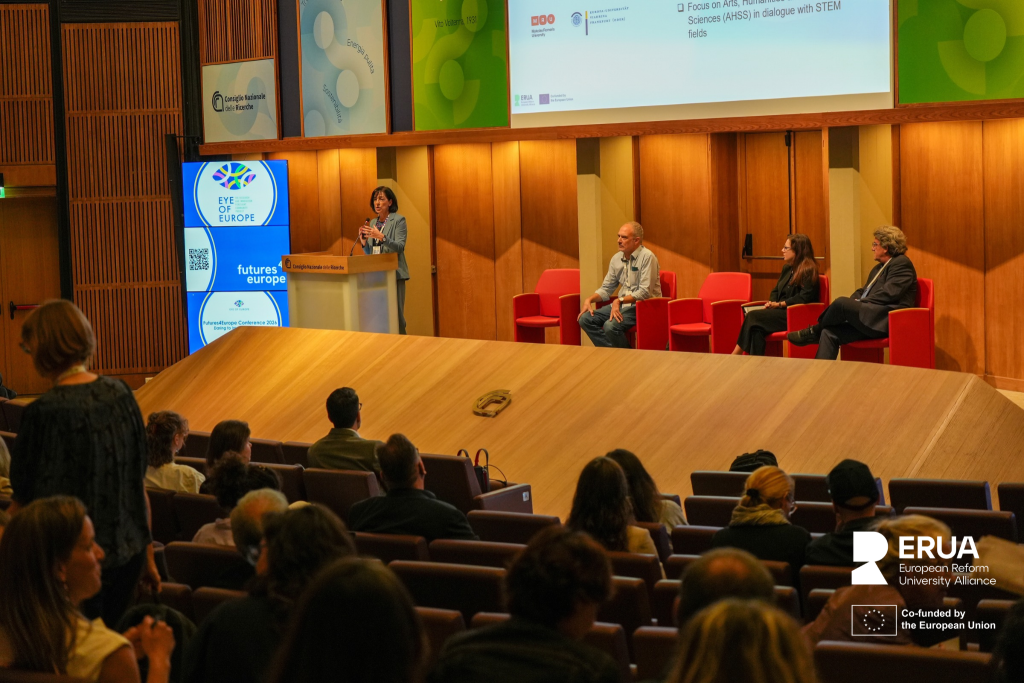
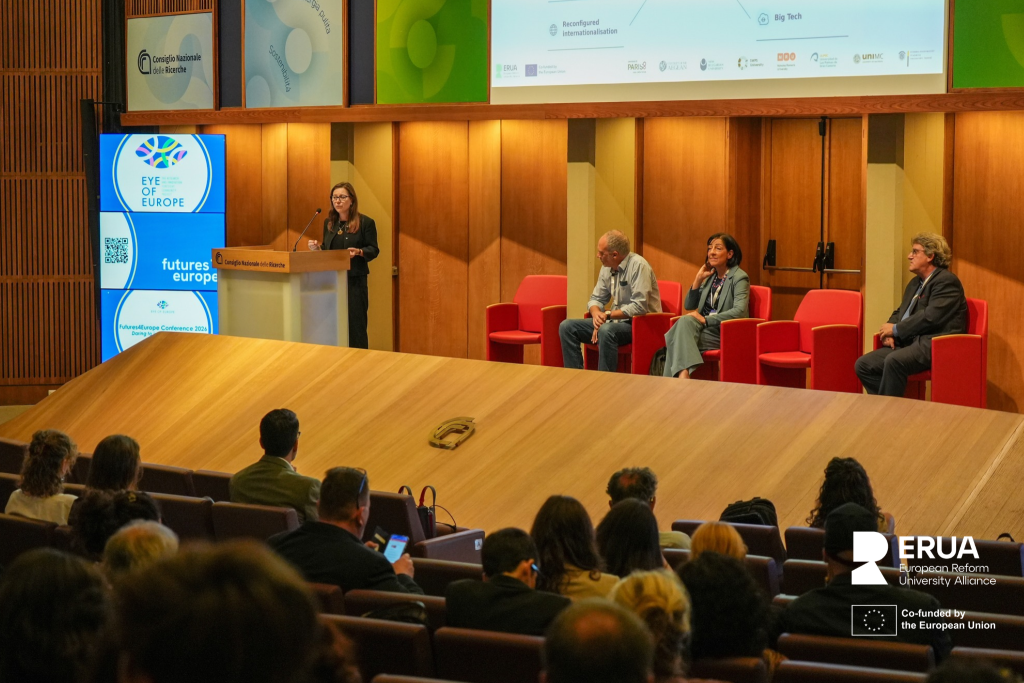
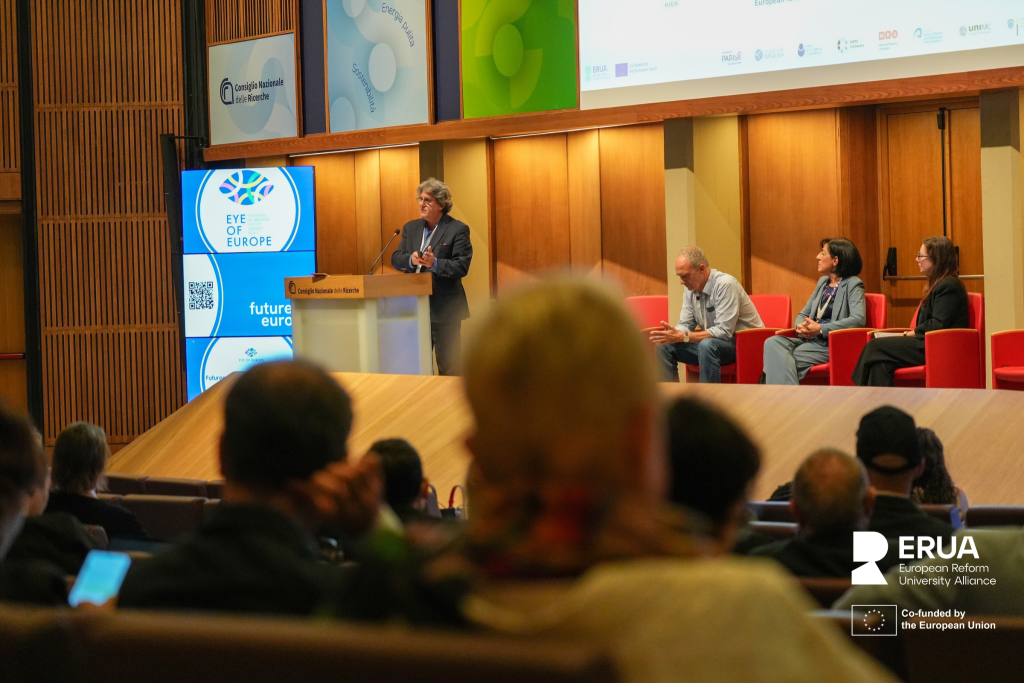
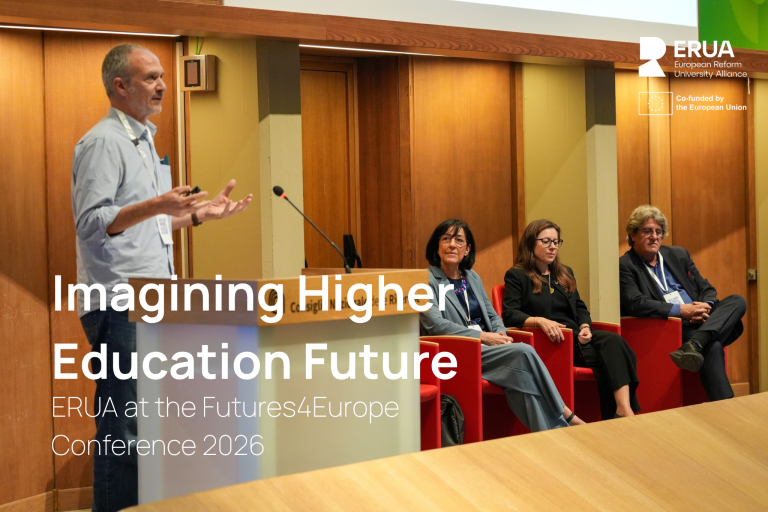
ERUA contributed to this conversation with the panel “Higher Education Futures: Foresight and Strategy in the European Reform University Alliance“, held on 1 October and moderated by Nikos Kastrinos of the European Alliance for the Social Sciences and the Humanities (EASSH). Kastrinos brings more than 25 years of experience at the European Commission and over 35 years of academic work in science, technology and innovation policy, and foresight.
Representing ERUA in the discussion were Silvana Colella, Vice-Rector at the University of Macerata; Alicja Kotlowska, Vice-Rector’s Representative at SWPS University; and George Strogylopoulos, Innovation Policy Expert at the University of the Aegean.
Foresight as a tool for imagining ERUA’s future
European University Alliances operate in a rapidly changing environment, facing questions around governance, funding, technological transformation, demographic change and long-term sustainability. The panel explored how foresight can help alliances look beyond immediate challenges, question assumptions and consider different scenarios. ERUA’s response is to step back from the day-to-day and imagine alternatives.
Silvana Colella, who leads ERUA’s work on the Alliance’s future strategy, presented the participatory foresight process developed within ERUA. By engaging different perspectives across the Alliance, the process helped partners explore alternative futures and identify shared priorities for ERUA towards 2040.
George Strogylopoulos focused on how this forward-looking work can be translated into strategic directions for the Alliance, addressing in particular the financial, legal and operational conditions needed to support ERUA’s development and sustainability over time.
Alicja Kotlowska highlighted the role of foresight in supporting participatory decision-making within complex organisations such as European University Alliances.She also called for greater “future thinking literacy” in the higher education curriculum, enabling students and wider university communities to better understand and engage with foresight methods.
Rather than attempting to predict what lies ahead, the ERUA experience presented in Rome showed how foresight can create space for collective reflection, participation and strategic imagination. In this sense, thinking about possible futures becomes a way of making more informed choices in the present – and of opening the conversation on the future of European university cooperation.