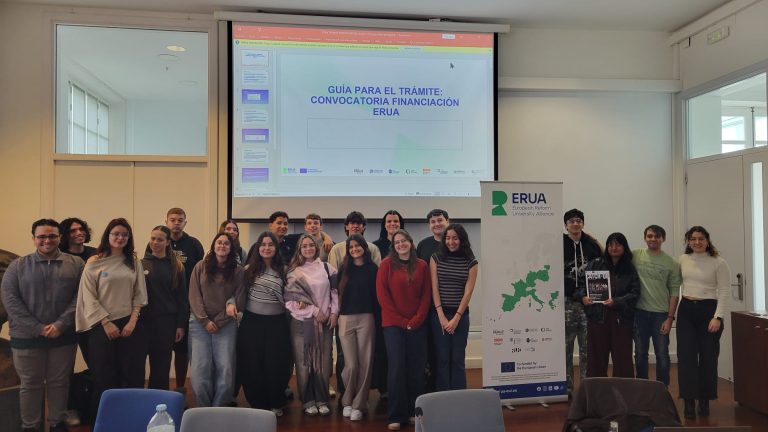
On 9 and 10 March, the University of Las Palmas de Gran Canaria hosted two information sessions aimed at students interested in learning more about the European Reform University Alliance (ERUA) and the opportunities offered by this European university alliance.
The morning sessions were organised by the students themselves, with the active participation of ERUA ambassadors and members of the Local Board. This approach allowed for an intimate and authentic insight into the alliance, based on real-life experiences. During the sessions, the speakers explained what ERUA is, what its objectives are, and how it impacts the academic and personal lives of its members.
In addition to presenting the alliance’s structure and activities, particular emphasis was placed on the many ways in which students can get involved. From participating in international projects to the possibility of joining the Local Board, the organisers encouraged attendees to take an active role and propose new initiatives that contribute to ERUA’s growth within the university.
One of the highlights of these sessions was their dynamic and participatory nature. To encourage interaction among attendees, activities such as games and icebreakers were included, which helped create a relaxed atmosphere and encouraged the exchange of ideas. This approach ensured that students not only received information but also felt part of a community from the very start.
Attendance was remarkably high, especially given the morning slot, which highlights the growing interest that ERUA is generating among students at the ULPGC. This increase in participation reflects a greater curiosity about the international and collaborative opportunities offered by the alliance.
These sessions clearly demonstrated the growing interest of the ULPGC community in getting involved with ERUA, highlighting how the alliance continues to consolidate and gain momentum within the university.
Through initiatives such as these, ERUA continues to expand its reach and reinforce its mission to build a more open, inclusive and connected higher education system at European level.
ERUA brings international opportunities to prospective students at the ULPGC Open Days
On 12 March, the University of Las Palmas de Gran Canaria held another edition of its Open Days, in which student ambassadors and members of the ERUA Local Board played an active role, with the aim of showcasing the university’s international dimension.
These open days, aimed primarily at pre-university students such as those in their final year of secondary school and those in Higher Level Vocational Training, as well as their families and the general public, provide a key opportunity to discover the ULPGC’s academic offerings first-hand and gain a closer insight into university life.
The event was used to highlight ERUA’s role within the university and to emphasise the many international opportunities it offers students. Adopting a friendly approach, the ambassadors shared their own experiences, explaining how the alliance facilitates participation in international activities, contact with students from other countries, and involvement in both academic and extracurricular initiatives.
ERUA’s presence at the Open Days also helped to bring the concept of internationalisation closer to those about to begin their university studies. Participants were able to see that being part of a European network is not some distant prospect, but a real possibility right from the start of their studies at the ULPGC.
This initiative helped not only to boost ERUA’s visibility within the university community, but also to spark the interest of prospective students, who will soon become part of the university community. Through its participation in events such as this, ERUA continues to consolidate its role in the ULPGC’s international outreach, bringing new opportunities to the next generations of students.