
Description of the Intensive course
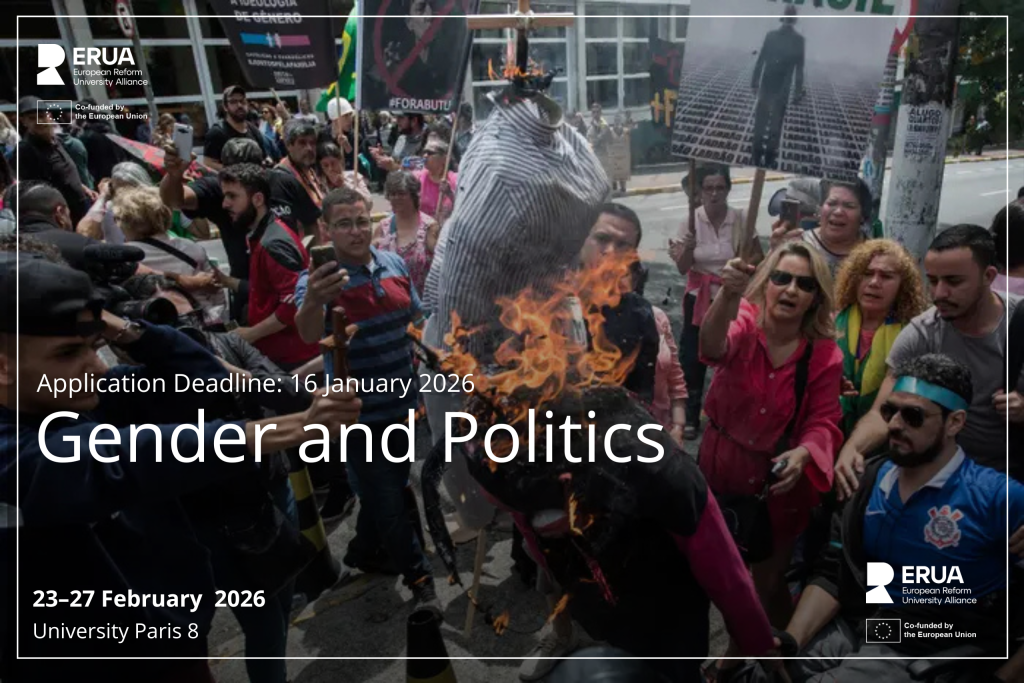
The course on “Gender and Politics” will start from current anti-gender campaigns throughout the world and then examine :
1. theories and concepts (eg gender and intersectionality; biopolitics and sexual democracy);
2. academic debates (eg sexual nationalisms; the sexual politics of neoliberalism);
3. social controversies (eg MeToo, the Islamic veil, the epidemic of transphobia).
To make the class more enriching, guest speakers will be invited during the week. These guests will include both academics and activists, with a special focus on feminist voices.
Your participation as a student will take several forms (in addition to readings, and informal discussions during lectures):
- short oral summaries of the discussions of the previous day;
- 15 minute oral presentations (of a book, an event, a figure, etc.);
- collective elaboration of the program of the last sessions (choice of topics, readings, etc.)
Learning outcomes
The course is meant to equip students with critical conceptual tools, starting with gender as “a primary way of signifying relationships of power” (Joan W. Scott), to better understand the current political situation, and in particular today’s anti-gender political campaigns as a crucial component of anti-democratic politics.
Assessement methods
The course will require:
1. either an oral presentation or a 3-page written review of a book or article.
AND
2. the final assessment is a 10-page research paper to be submitted at the latest a month after the end of the course, or, if more convenient for some students, an in-class written exam on the last day.
Why You Should Apply?
This course allows students to engage deeply with gender and politics in contemporary society. Through a mix of lectures, debates, and interactions with both academics and activists, you will strengthen your critical thinking, develop your own informed viewpoints, and better understand how academic analysis connects with real-world activism.
Who can apply?
This course is open to 20 ERUA students.
No specific prerequisites are required, although some background in political theory, social sciences, and / or gender studies could be helpful.
How to apply?
If you are interested, please submit your application by January 16th, 2026, to the following address:
https://paris8.moveonfr.com/locallogin/660eb384386d1ea0ce0c5ad8/eng
Your application should include:
- CV
- Cover letter (no AI-generated letters, please!)
If your application is accepted, you and your local ERUA team will be notified by January 26th, 2026.
If you are selected, they will also provide you with information regarding travel and accommodation funding.
If you have any other administrative questions about the course, please contact your local ERUA team at your university or Paris 8 local team (erua.eui@univ-paris8.fr).
Credtis for the image: Judith Butler burnt in effigy in Sao Paulo 2017
Protests against Judith Butler’s participation in ‘The Ends of Democracy’ conference at SESC Pompéia, São Paulo, 7 November, 2017