In late autumn 2025, students and lecturers from across the European Reform University Alliance (ERUA) gathered for a “Winter School on Contested Territories and Legal Remedies in Public International Law” — an intensive, cross-border academic program that explored how international law operates in regions affected by political division and territorial disputes. The school was co-organized by SWPS University (Poland), Mykolas Romeris University (Lithuania), the European University Viadrina (Germany), and the University of Macerata (Italy).
Challenges of modern international relations
The initiative brought together the law and psychology students, researchers, and practitioners who discussed some of the most complex issues in modern international relations — sovereignty, human rights, state responsibility, and peacekeeping. The organizers employed a combination of theory, simulation, and first-hand field experience to make the learning experience interesting and effective.
Blended and Experiential Learning Format
The Winter School was structured as an interdisciplinary elective course, taught fully in English, open to students from all ERUA partner institutions. It consisted of two interconnected parts:
- Preparatory online module (October 2025) – four interactive evening lectures provided a shared foundation in international law, covering topics such as:
- Contested territories and self-determination (lecturer Dr. Tomasz Lewandowski, SWPS University)
- Human-rights jurisprudence in conflict zones (lecturer Ines Frikech Laraki, European University of Viadrina)
- Occupational law and state responsibility (lecturer Professor Justinas Žilinskas, Mikolas Romeris University)
- The principle of non-discrimination in divided societies (lecturer Professor Rachele Marconi, University of Macerata).
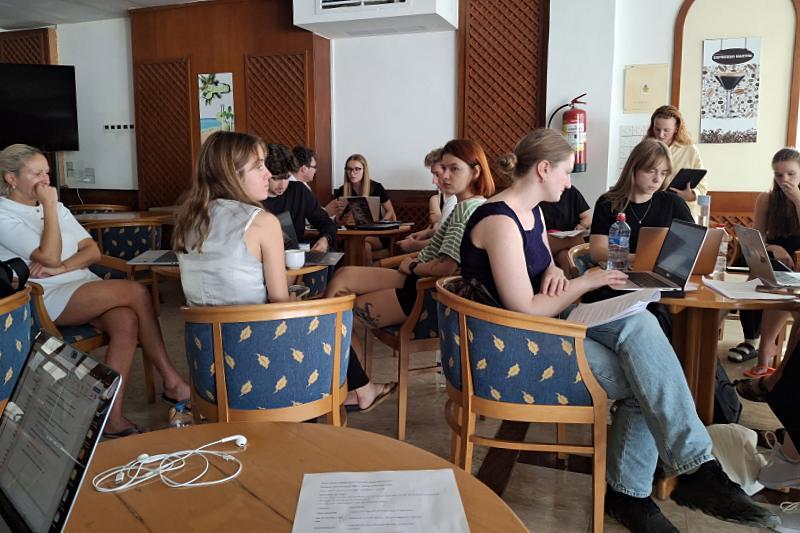
- On-site workshop in Cyprus (November 2025) – a week-long field program that combined academic sessions, institutional visits, and immersive study in the unique environment of the divided island of Cyprus, such as:
- Opening workshop in Paphos, revisiting key legal concepts and introducing collaborative assignments (Conflict Map and Policy Memo)
- Human Rights and Effective Control workshop, featuring a mini-moot court simulation inspired by European Court of Human Rights (ECtHR) case law
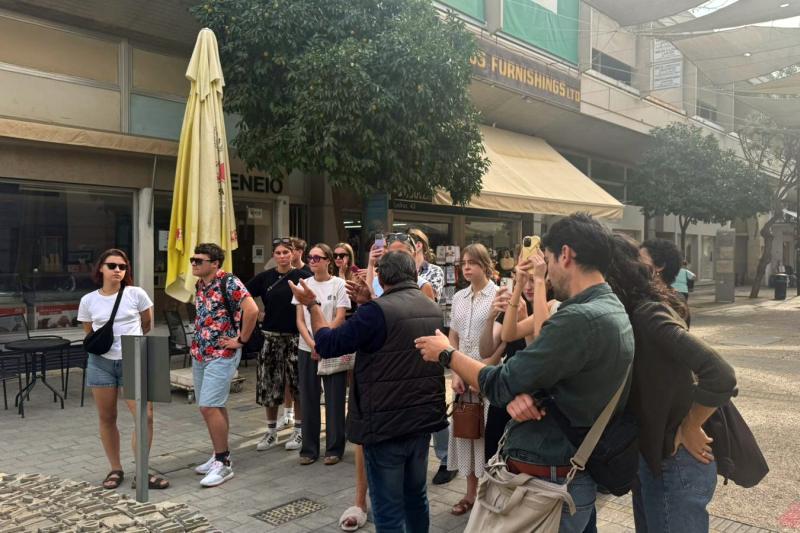
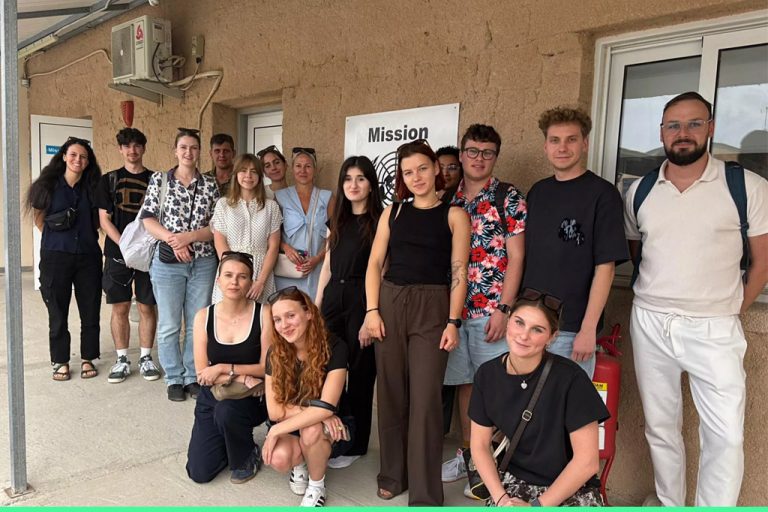
- Guided exploration of Nicosia, the last divided capital in Europe, that included visits to both sides of the Green Line and a briefing at UNFICYP Headquarters and the Old Nicosia Airport
- Guest lectures at Neapolis University Pafos – Human Rights Observatory, including a discussion on “Human Rights in Contemporary Conflict Settings and the EU Artificial Intelligence Act”
- Field study in Famagusta and Varosha that focused on cultural heritage, property restitution, and post-conflict governance
- Final moot-court simulation before a mock ECtHR panel, where students presented oral arguments in a fictional case concerning displacement and property rights.
Throughout the week, participants combined theoretical reflection with empirical observation, merging the knowledge they had learned online with real-world contexts of law and governance.