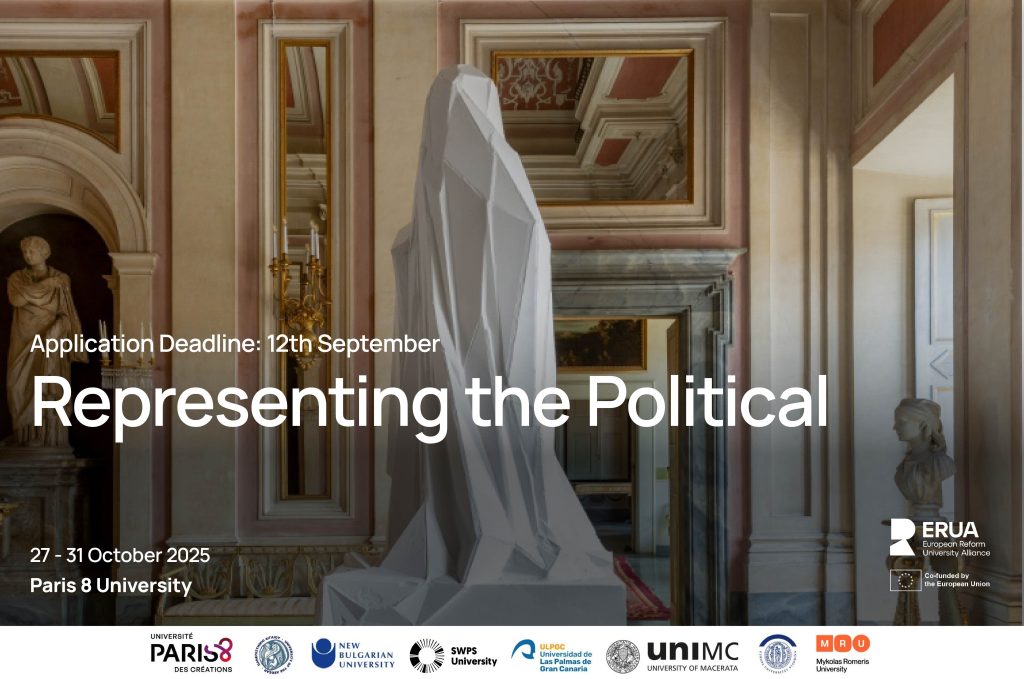
The study of representations of power is inextricably linked to examining the ways in which power is deployed and embodied in public spaces.
This course will explore the visual manifestations of power, including architectural design (e.g. parliament buildings and museums), the selection of statues in public spaces or street signs, the choice of memorial locations, and photographic techniques. Through case studies and various media, the course will explore domination and resistance practices through visual representations such as cartography, photography, museography, statuary, and commemorative practices. It will also study the actors and social groups that shape or reveal these spaces, e.g. artists, directors, museographers, activists, committed or uncommitted spectators, and supra- or infra-state actors.
Here you will find more details about the expected programme of the course.
Learning outcomes:
As a student, you will bring your background in historical analysis, critical thinking, and a basic understanding of visual culture. You will also contribute your own cultural perspectives and experiences with contemporary media, which will enrich group discussions and collaborative learning.
By participating in this course, you will:
• develop practical skills in visual sociology methods such as rephotography and photo elicitation,
• strengthen your ability to critically analyze how power operates in public spaces, monuments, and cultural representations,
• gain hands-on experience in fieldwork research, collaborative project management, and creative approaches to decolonizing commemorative practices.
Assessement methods
• Individual in-class assignment: five questions covering all course topics (October 31).
• Group assignment (3–4 students per group): Rethinking “pantheonisations” — exploring decommemoration and pantheonisations from below. To be submitted on Moodle by December 15, 2025. Further details will follow.
Why You Should Apply:
This course will help you better understand urban spaces as historical layers, explore the politics of memory and memorialization, and take part in current debates on decommemoration and alternative ways of thinking about commemorative practices, especially at a transnational level.
You will also gain interdisciplinary research skills that connect visual sociology, urban studies, and postcolonial theory, preparing you to actively contribute to discussions on cultural heritage, social justice, and the democratization of public memory.
Who can apply:
This course is open to 15 ERUA master’s students with a background in social sciences, preferably sociology or political science. Creative and artistic skills are welcome. The course is particularly suited to those interested in museum studies, European studies, memory studies or, more broadly, cultural studies, especially in the context of Russia’s war of aggression against Ukraine.
How to apply:
If you are interested, please submit your application by September 12 the following address.
Your application should include:
- CV (please indicate, if possible, your Bachelor grades or at least your honors/average, so that we can better assess your academic level. The CV should also detail any relevant professional experiences, previous mobilities, etc.)
- Cover letter (no AI-generated letters, please!
If your application is accepted, your local ERUA team will be notified within two weeks and, depending on the budget, you will receive travel and accommodation funding from your home university.
For any administrative questions, please contact Irene Serra (irene.serra@02univ-paris8.fr) or your local ERUA team at your university.
Funding:
ERUA students can receive travel and accommodation funding from their home universities. Please contact your local ERUA coordinators.