From 20 to 22 May 2026, ERUA and New Bulgarian University hosted the intensive on-site course “Archetypes and Algorithms: Exploring Tarot through AI Art”, led by Asst. Prof. Ivaylo Saraliyski, PhD. The three-day workshop brought together students from Paris 8 University and the University of Macerata for an experimental programme exploring the intersection of visual culture, symbolic knowledge systems, and contemporary generative AI technologies.
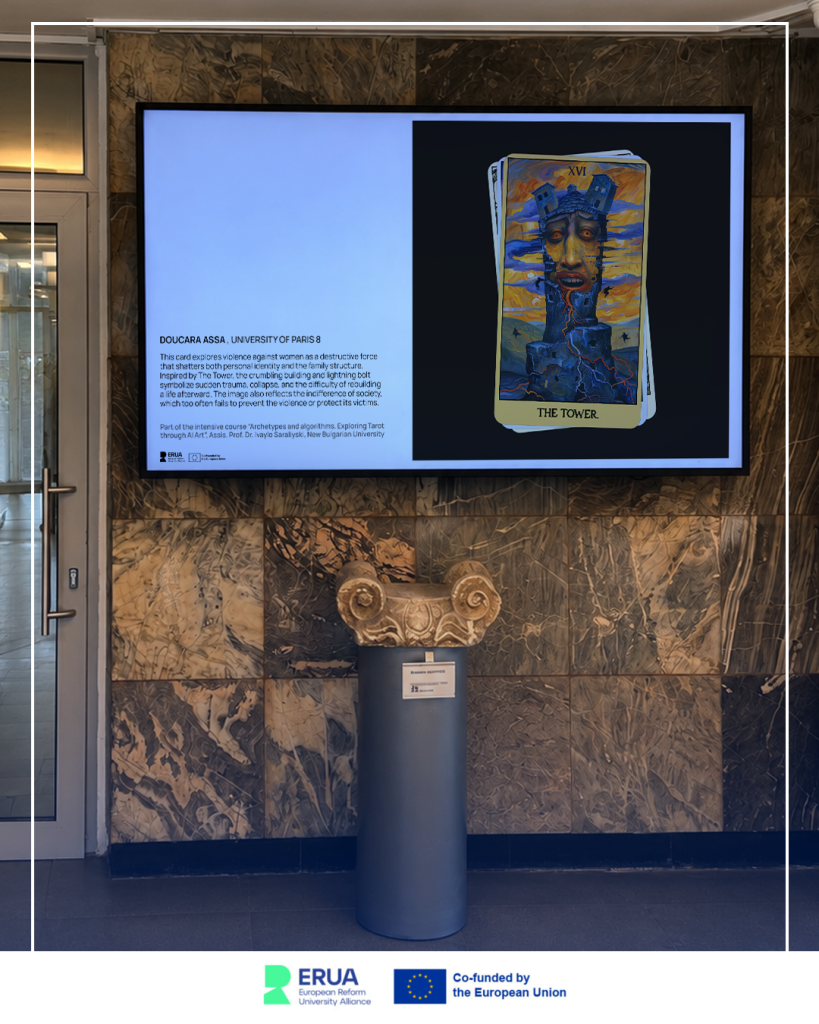
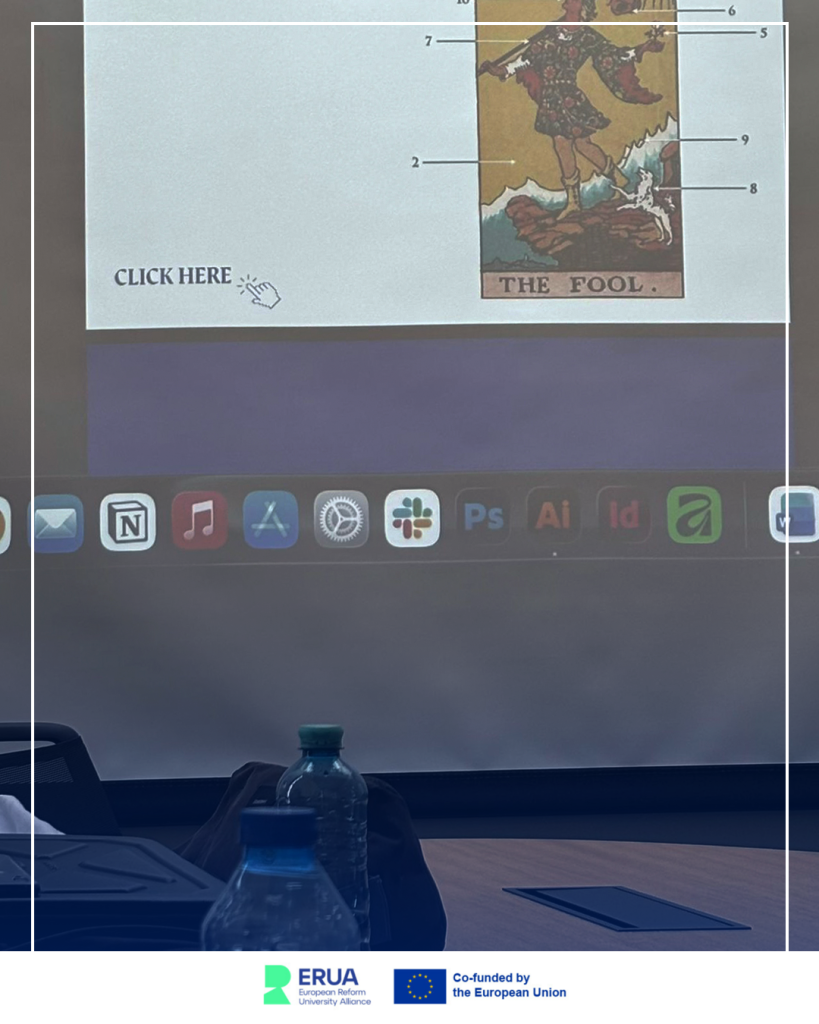
During the workshop, students selected Tarot cards and developed short intuitive interpretations of their symbolic meanings. They then connected these archetypes to contemporary social issues and translated their interpretations into prompts, using generative AI tools to create new visual responses. A key part of the process was the comparison between historical Tarot imagery, personal associations, social contexts, and machine-generated interpretations, opening a discussion on authorship, randomness, ritual, and meaning-making in human – AI collaboration.
Over the three days, participants worked on the construction of individual AI Tarot decks, paying attention not only to the generation of separate images but also to visual coherence, conceptual clarity, and curatorial decisions. The course concluded with presentations of selected cards and an experimental “AI Tarot reading” session, through which students reflected on the possibilities and limitations of algorithmic interpretation.
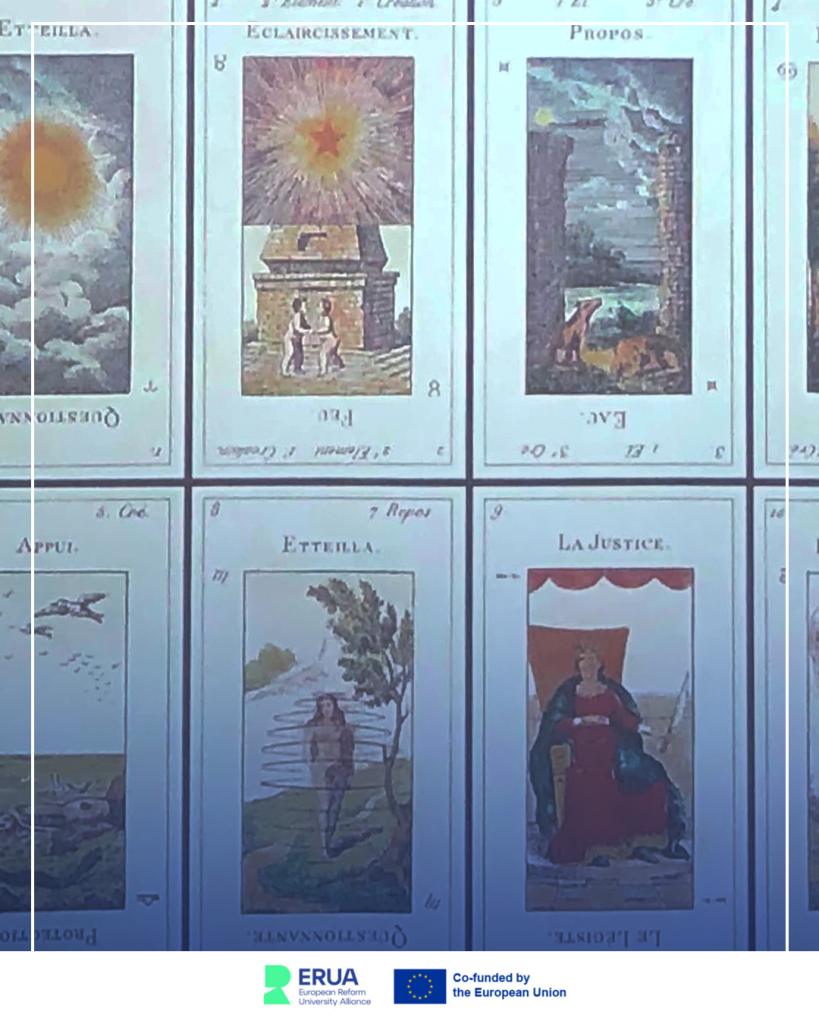
The final results were presented as a digital student exhibition on the screens of New Bulgarian University. The exhibition focused on the interpretation of Tarot through contemporary social issues and AI, showcasing how archetypal images can become a visual language for reflecting on personal, cultural, and societal questions. The presented works highlighted the dialogue between symbolic traditions, critical social awareness, and emerging technologies.
By combining archetypal analysis, creative prompt engineering, AI image production, and critical reflection, the workshop fostered AI literacy not only as a technical skill but also as a cultural and philosophical practice. The course offered students an opportunity to question how machines interpret symbols, how humans assign meaning, and how artistic practice can create new forms of dialogue between tradition and technology.