Frankfurt (Oder) / Słubice, 29 April 2026
Intense discussions in working groups, prominent public events and valuable opportunities for exchange were offered at the two-day networking event “Doing Democracy: Connecting Academia and Civil Society Across Borders” on 23 and 24 April 2026 in Frankfurt (Oder) and Słubice. The event was co-organised by the European University Viadrina (EUV) and the Social Science Institute of SWPS University of Warsaw (USWPS) as part of the European Reform University Alliance (ERUA). The University of the Aegean contributed to the programme as lead of ERUA’s Work Package 5 on achieving social change in local communities and regions.
Doing Democracy — the core idea behind the event’s title is that democracy is not something that can be taken for granted, but must be practised anew every day. “Democracy depends on being constantly revitalised and defended,” emphasised Viadrina President Prof. Dr Eduard Mühle at the start of the event. How “doing democracy” is organised in Germany and Poland in the face of current challenges was discussed just as intensively over two days, alongside the role that academia and civil society play when democracy comes under threat.
It was a cross-border project in many respects, with students, researchers and representatives of civil society coming to the Viadrina and the Collegium Polonicum. The cross-border location — with a campus split across two countries — was itself symbolic. The split-venue arrangement gave participants a firsthand perspective on cross-border cooperation, allowing them to directly compare the urban dynamics and operational frameworks of both cities. The timing, as part of the celebrations to mark 35 years of the German-Polish Neighbourhood Treaty, provided the perfect backdrop.
The lack of need to understand reality — the scientific perspective
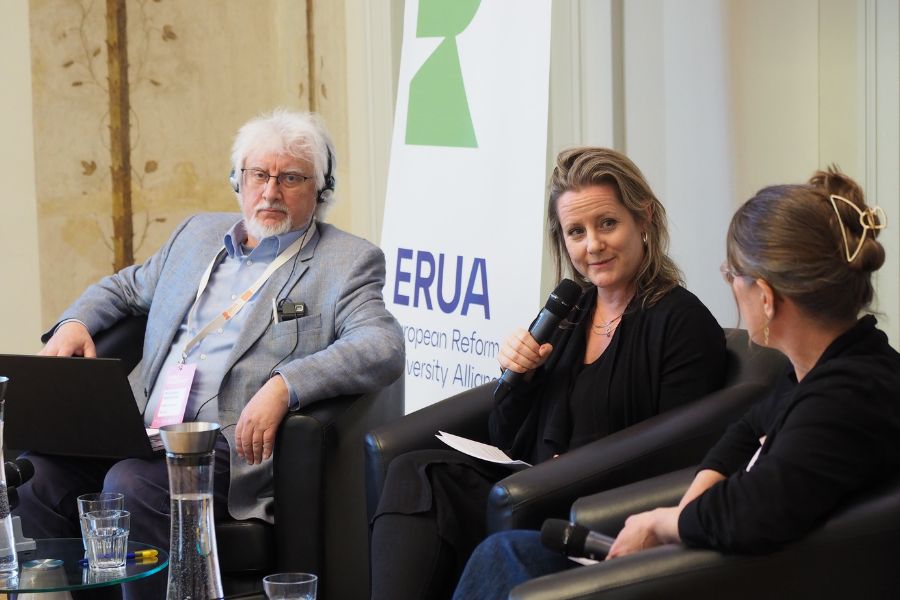
Despite the festive occasion, the public talks were anything but Sunday speeches. The debate on the state and resilience of modern democracy featured several distinguished experts: Prof. Dr Radosław Markowski (political scientist specialising in electoral behaviour research, Center for the Study of Democracy, SWPS University); Prof. Dr Gesine Schwan (political scientist, former Rector of EUV, and former candidate for the office of President of Germany, long engaged in Polish-German dialogue); Dr Anne Holper (Co-Head, Center for Peace Mediation, Institute for Conflict Management, EUV); Dr Anja Hennig (Institute for European Studies, EUV); and Krzysztof Izdebski (Stefan Batory Foundation).
In the opening discussion on the question “Why link science and civil society in the field of democracy?”, Prof. Markowski repeatedly contributed some painful findings from his research. He emphasised that a growing group of people have no need to gain knowledge about reality. “Part of society is more lost than we originally thought,” he said. The problem is not just ignorance, but an attitude of knowledge avoidance — what he called a “new form of fear of freedom” after Erich Fromm — which paves the way for populist leaders with simple truths. Markowski emphasised that this knowledge must not remain in academia, but must be incorporated into the work of civil society.
Tackling democratic scepticism — the role of civil society
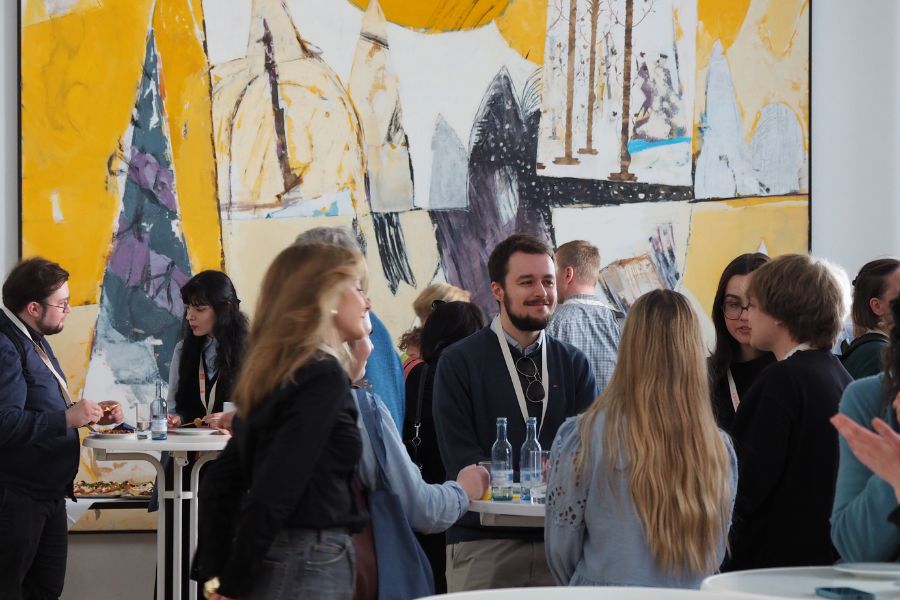
The composition of the participants showed just how great the need is among representatives of civil society to network with researchers. “I was extremely pleased to be invited to this event,” said Karola Kunkel from the Halle Peace Circle. “Basically, our contact with science is far too limited for the fact that we have very similar long-term social interests,” she emphasised, while also pointing to the lack of capacity and precarious conditions under which associations like hers sometimes operate.
A challenge that Carsten Herzberg from the Mitmachen e. V. association knows well — some of its programmes are currently under acute threat of cutbacks. For him, the shift in perspective between German and Polish organisations and between the realities of science and civil society was particularly valuable. “I believe that it is a key point to tell each other about our own experiences and working environments, which are very different.” His working environment is shaped by austerity measures as well as the realisation that individual participation tools such as citizens’ budgets alone will not save democracy — which is why his organisation combines participation with education: teaching young people how they can get involved in their cities, educating them about disinformation, and practising basic democratic principles.
Olga Żmijewska founded the Sztuka Wolności (Art of Freedom) Foundation in her home village in Masuria after studying at the Viadrina. “Doing democracy is something I practise every day; I translate academic discourse into a different, practical language,” is how she describes her work. For her, returning to the countryside is an approach to regaining lost trust. “I appeal to politicians to support people in returning to the places they come from. These are our treasures with great potential for trust.”
Participation between democracy and populism
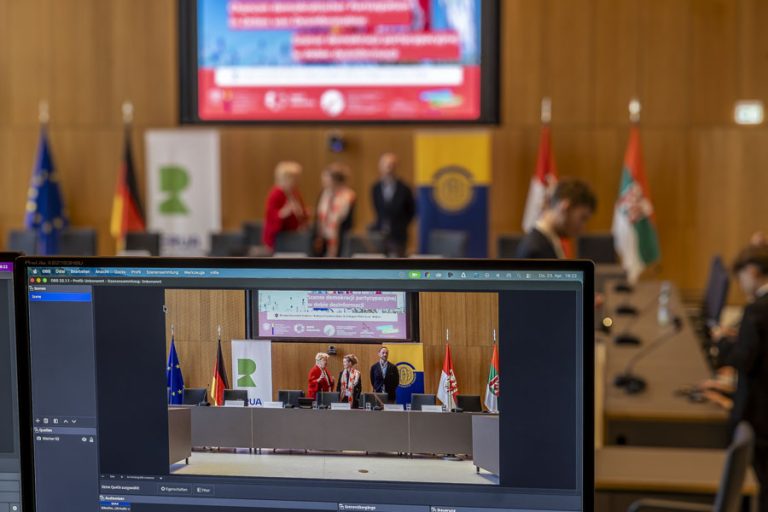
The panel discussion “Opportunities for democratic participation in the age of disinformation” — held in the City Council Chamber of Frankfurt (Oder) City Hall and organised as the 4th ERUA DigiTalk under the aegis of the University of the Aegean — also focussed on the question of trust. Livestreamed simultaneously in English, German and Polish, it reached audiences well beyond the conference room. Krzysztof Izdebski raised a central problem: “What we see time and time again is that people take part in participation formats, but they are not heard.” In his view, participation needs to be standardised so that, for example, it becomes mandatory for politicians to respond, even when citizens’ ideas are not implemented.
The Municipal Development Advisory Board (KEB) for the design of Słubicer Straße in Frankfurt (Oder) shows how results can end up in the drawer even in large-scale participation formats. Although the format of Prof. Dr Gesine Schwan’s Berlin Governance Platform brought together all relevant groups and adopted a proposal, this was not accepted by politicians. Despite such setbacks, Schwan believes that after ten test runs throughout Germany, municipal development councils remain a meaningful way of promoting democracy: “The participants often say that it was the most strenuous thing they have ever done. But they also realise that we are often not as far apart as we thought.”
Izdebski summarised a fundamental problem with democratic participation: “We are losing credibility because the language of democracy and participation is being appropriated by right-wing populist groups.” In the narratives of populist parties, relying on nuance and cooperation rather than exclusively following the voice of the people is portrayed as undemocratic. “When we take action against hate speech, we are portrayed as censors,” he said.
Working groups and student engagement
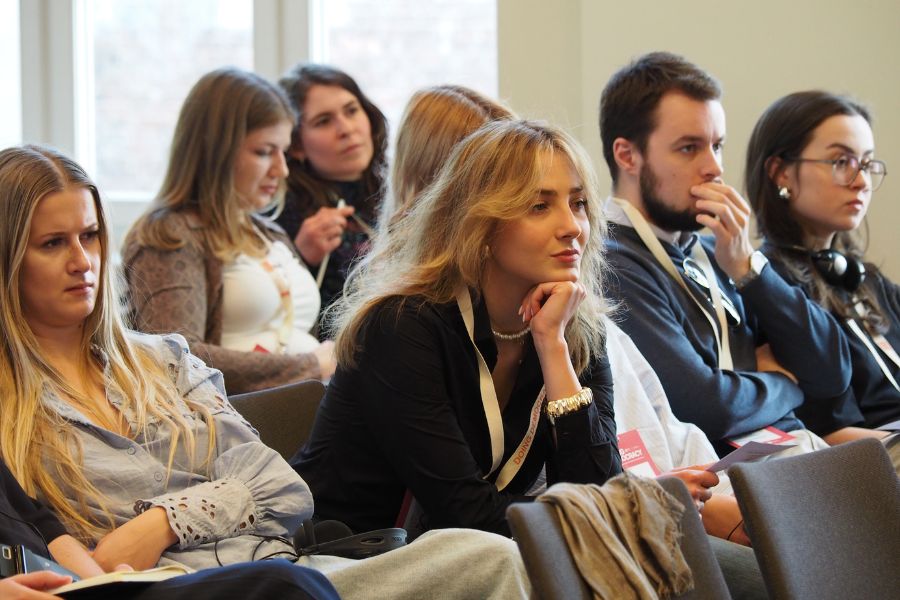
A key element of the conference was its workshop-based format, which brought together international thematic groups. Representatives from both universities worked on challenges in areas including youth participation and civic education in the era of media disinformation; strengthening dialogue and local participation; and strategies for combating hate speech and right-wing extremism.
Alongside established researchers, members of SWPS University’s Public Life Student Research Club — Michał Grzębowski, Zofia Kwiatkowska, Zofia Ekiert and Maria Zarzecka — actively participated in the conference. Doctoral student Artur Koldomasov served as co-organiser and moderated the Future Lab panel. Thirteen Master’s students from the Viadrina participated in the entire conference as part of a seminar with Dr Hennig; they now have the task of filtering problems from the discussions, researching them, and writing policy briefs with recommendations for politicians, administrators or the university.
“One of the most interesting aspects of this trip for me was the experience of the location itself — the chance to see two cities operating on opposite sides of the border and compare them in practice,” said Michał Grzębowski, Chair of the Public Life Student Research Club. “I also deeply appreciated the lack of artificial distance between professors and students. Another fascinating element was the bilingual organisation of the conference; being able to speak in one’s native language while having it translated made communication feel more natural and accessible.”
Conclusion at the Future Lab
The Future Lab at the end of the networking event revealed just how nuanced and rich in perspective the work had been. Working groups presented their ideas on youth participation, hate speech and minority rights, making clear that there can be no one-size-fits-all solutions to these complex challenges. The closing event confirmed what Prof. Markowski had already emphasised at the start with regard to different political cultures: “We don’t have to strive for universal recipes, I don’t see them.”
What remains of “Doing Democracy”? — Organiser Dr Anja Hennig draws a conclusion
Anja Hennig, as one of the organisers of Doing Democracy, you called the networking event between academia and civil society an experiment. Has this experiment been a success?
On the whole, the concept worked very well. It was very intensive and networking definitely took place. What was interesting was the high demand among students and the very manageable presence of researchers and lecturers from both universities. We put a lot of effort into making the discourse spaces open and at the same time focussed on content. This seems to have worked well — especially in such inspiring spaces as the Viadrina’s Coworking Space and those of the European New School in the Collegium Polonicum.
It was a special challenge for the graduates of the ViAPACS programme, who now had the opportunity to gain practical experience after their training and moderated the German-Polish working groups. They did a great job leading the discussions and presented well-organised and exciting results for the Future Lab.
What were the most interesting aspects of the two days for you?
As a political scientist, it was interesting — but also frightening — to learn how German and Polish non-governmental organisations are suffering from the increasing restriction of their scope for action. I had previously only seen this in the literature on “shrinking spaces”. On the one hand, this limitation is caused by continuous questioning of the political neutrality of their activities. Another strategy to hinder democracy activists is overly complex requirements for impact analyses of NGO work.
I also found it instructive to learn from the Polish side how differentiated the promotion of civil society is in Poland — that there are special participation programmes in rural areas that are in great demand. But here too, both sides recognised that participation only makes sense for solving municipal problems if the process is well integrated with the political level. There is a lack of this in both countries, as Gesine Schwan also confirmed during the panel discussion.
What remains of “Doing Democracy”?
The 13 Master’s students will research the problems identified in the discussions and write policy briefs to be sent to selected addressees and published on the Doing Democracy website. In July, four articles on the conference from a German-Polish perspective will be published on the Blog Entanglements of the Viadrina Center of Polish and Ukrainian Studies (VCPU). In the long term, there is a great deal of potential for networking university teaching and NGO work — appropriate formats still need to be developed to stabilise this.
Doctoral student Artur Koldomasov, who co-organised the event from the SWPS side, echoed the sentiment: “I would like to extend my sincere thanks to the EUV team for their hard work in fostering such a vibrant and meaningful exchange of ideas. The conference served as an excellent networking platform, connecting us with NGO representatives from both Poland and Germany. By engaging in international, cross-sector projects like this, the university proves that it doesn’t just analyse the world — it actively helps shape it.”
Recordings of the public events are available at ecos.erua-eui.eu. The event was organised by the European Reform University Alliance (ERUA), the European University Viadrina and SWPS University, with the kind support of the Brandenburg Ministry of Finance and for Europe (MdFE), the Foundation for German-Polish Cooperation (SdpZ), the City of Frankfurt (Oder), the Viadrina Centre B/ORDERS IN MOTION, the Institute for Conflict Management (IKM) and the Viadrina Center of Polish and Ukrainian Studies (VCPU).
Frauke Adesiyan, European University Viadrina Frankfurt (Oder)
Photos: Fritz Schlüter, European University Viadrina Frankfurt (Oder)