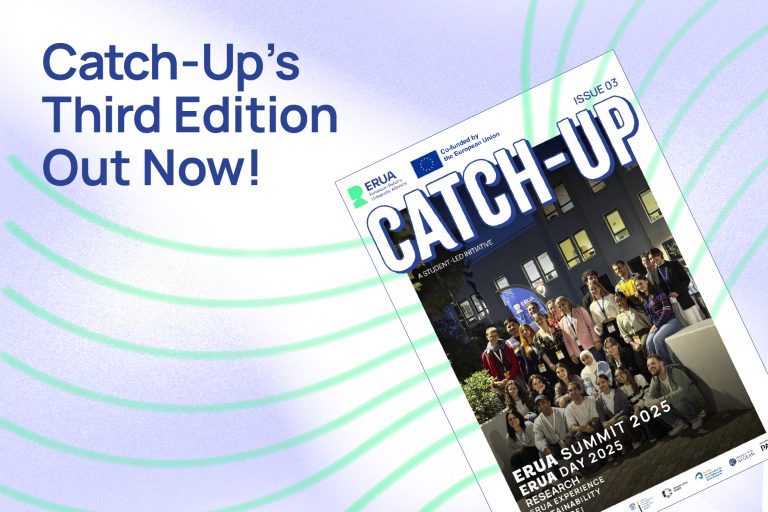
Issue III of Catch-Up! is out — and honestly, this one is something special. For the first time ever, all eight ERUA partner universities have contributed to a single edition. That’s not just a fun fact; it’s a sign of what this community is becoming. And the content matches the moment: this issue doesn’t just report on what’s been happening across the alliance — it lets you hear directly from the students living it.
This edition takes you to Mytilene, Lesvos, where the University of the Aegean hosted the 2025 ERUA Annual Summit and Winter School — five intensive days of workshops, panel discussions, and real conversations about democracy, AI, migration, and the future of higher education, with students front and centre throughout. You’ll also find snapshots from ERUA Day celebrations at all eight partner universities, each with its own flavour: rock concerts and wish boxes, fencing workshops and board games.
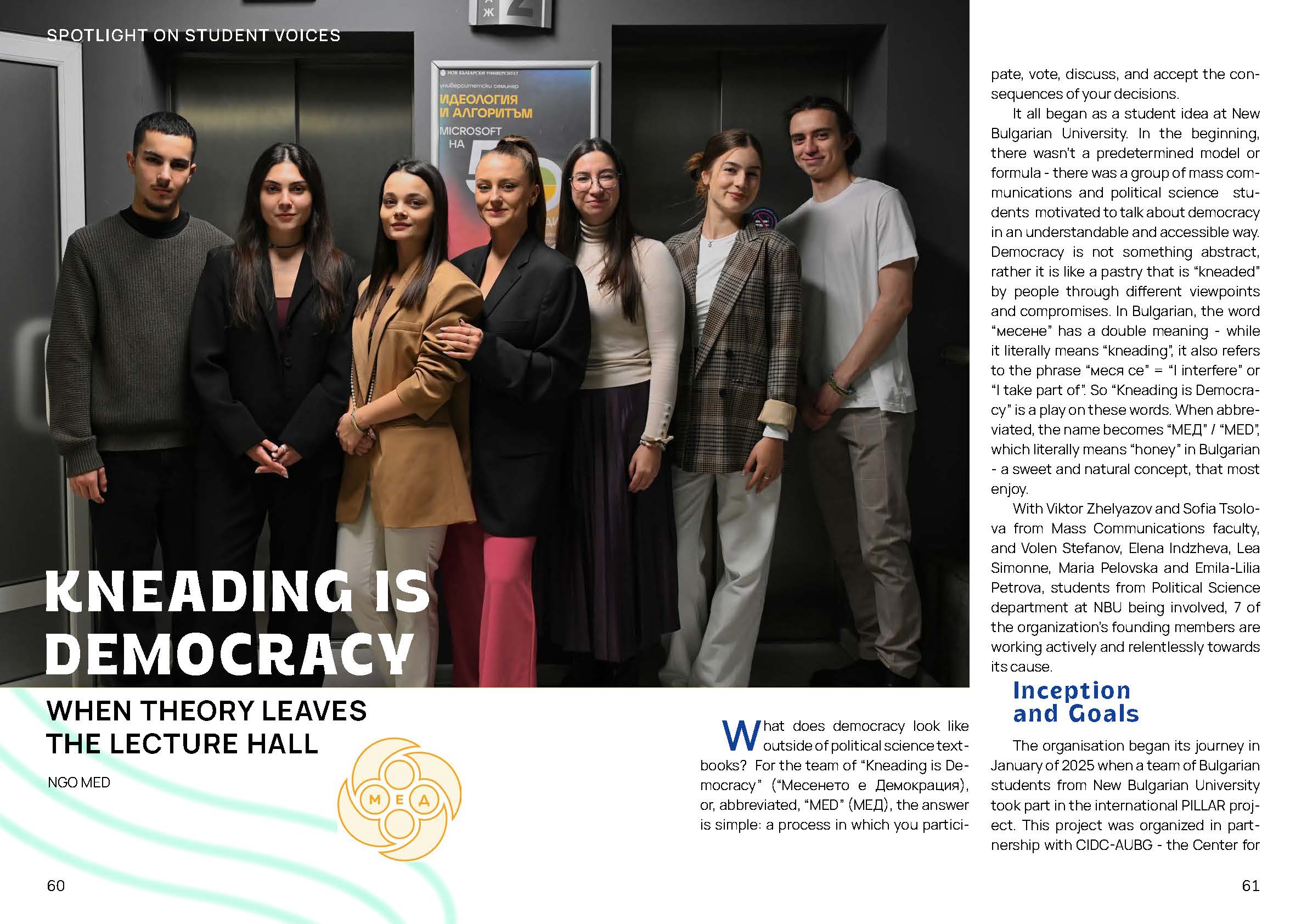
Beyond the highlights, Issue III goes deeper. The Blue Commission presents their student-written Manifesto for Sustainable Higher Education — 35 concrete proposals, handed directly to ERUA’s rectors. A travelling seminar takes students from Macerata to Vilnius to wrestle with politics and democracy in the age of AI. Research articles dig into why Europe’s green policies struggle to reach citizens. And student-led initiatives from Las Palmas to Sofia — including an international education project in Kenya and a student NGO turning democracy into a game — show what ERUA students are building beyond the lecture hall.
There is also the first-ever ERUA Creative Expression Contest, with winning poems, photographs, illustrations, and videos from students across the alliance. Worth a look just for those alone.
This issue is now available in digital format (PDF). Go read it.