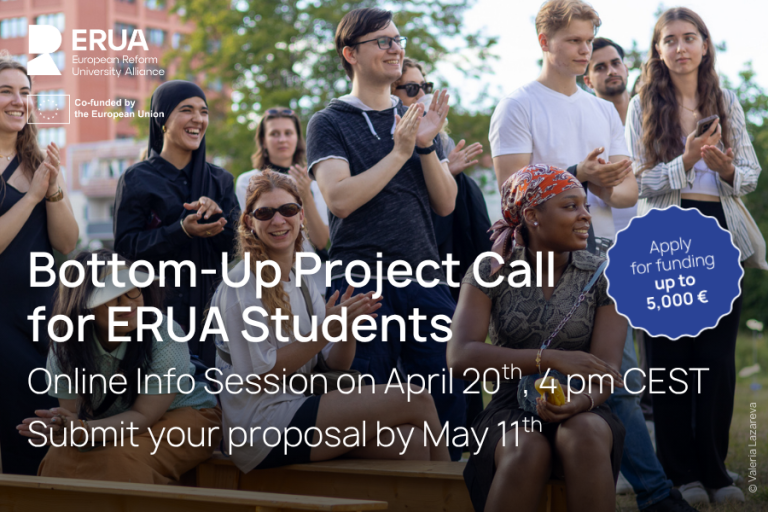
Students across the European Reform University Alliance (ERUA) are invited for a third time to submit ideas for collaborative, student-led initiatives through the Bottom-Up Project Call for Students. The call supports international teams of students who wish to develop innovative projects that contribute to student engagement, wellbeing, sustainability, or other topics aligned with ERUA’s mission.
Selected teams can receive funding of up to €5,000 to implement their project over a period of up to eight months. Projects must be developed by students from at least two ERUA member universities, encouraging cross-campus collaboration and exchange within the alliance.
ERUA Online Info Session
To help interested students learn more about the call, requirements, and application process, an online information session will take place:
20-04-2026 at 16:00 CEST
It will be held via Zoom (this is the Zoom link for the online consultation)
(The video recording will be made available on the collaboration board)
Participants will have the opportunity to ask questions and receive guidance before preparing their proposals.
How to Apply
Students interested in applying should review the full call guidelines, eligibility criteria, and application templates on the official ERUA website.
Important Dates
- 20 April 2026 (16:00 CEST) – Online information session
- 11 May 2026 – Deadline for proposal submission
- End of May 2026 – Official announcement of selected projects
- June – September 2026 – Start of project implementation
- By February 2027 – End of project implementation and reporting phase
Students are encouraged to form international teams, develop creative ideas, and contribute actively to strengthening the ERUA student community.
More information, application guidelines, and templates are available on the ERUA website.