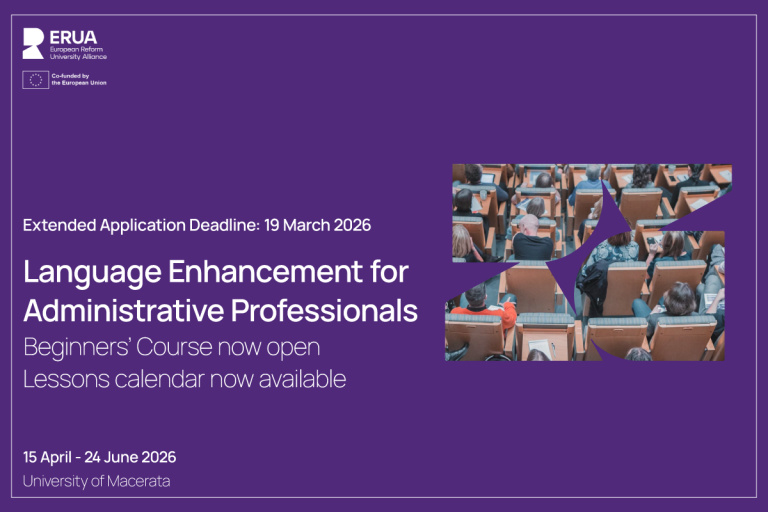
The University Language Centre (CLA) of the University of Macerata has opened registration for the Beginners’ English Course, specifically designed for technical, administrative and library staff (TAB) who wish to develop their English language skills starting from a basic level.
This initiative forms part of the University’s ongoing commitment to strengthening staff competences within an increasingly international academic environment and to supporting the objectives of the ERUA Alliance.
Course Overview
The Beginners’ course provides foundational English language training tailored to the needs of university administrative, technical and library staff. The programme focuses on essential communication skills required in professional contexts, including:
- Developing basic English language and communication skills for university administration
- Building core vocabulary used in administrative and library settings
- Strengthening reading and writing skills for simple professional texts
- Improving grammatical accuracy at an elementary level
- Enhancing confidence in everyday workplace communication in English
The course for ERUA members is offered entirely online and consists of 21 compulsory teaching hours, plus 3 hours for the final examination.
Participants who successfully complete the programme will receive an Open Badge certificate of attendance issued by the University Language Centre.
Check the lessons’ calendar here.
How to Apply
Interested staff members of the ERUA Alliance are invited to complete the online registration form by 16 March 2026 at the following link:https://forms.office.com/e/bhTDURM4WF
For any further info, please visit the CLA Unimc website.