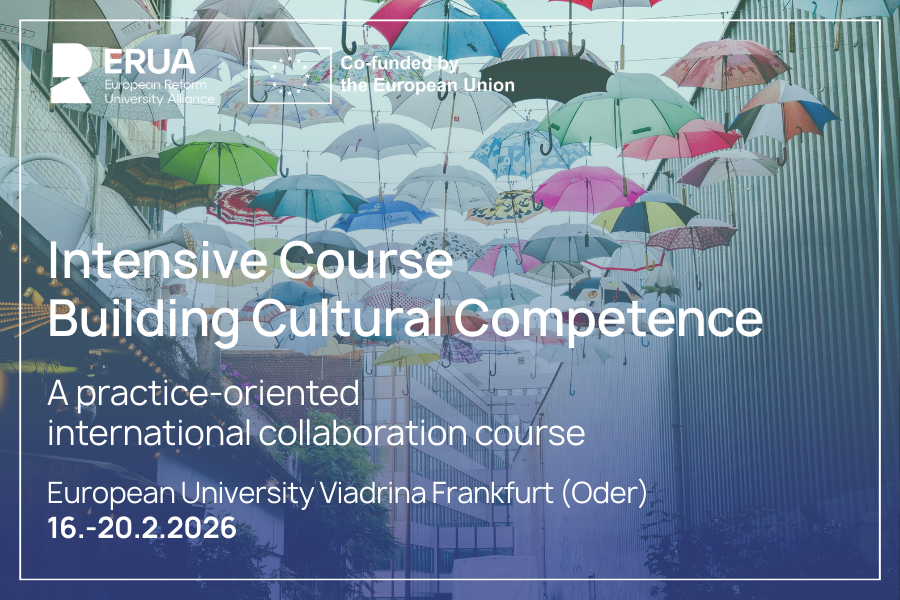
Description of the course
Intercultural Competence is considered a key competence and future skill. However, its idea remains fuzzy. There is a variety of definitions as well as critique. Intercultural learning and cultural awareness are becoming more and more relevant, e.g. in the sustainability discourse, as challenges require collaboration and consideration from an interconnected and global perspective.
In this interactive and practice-oriented seminar concepts of intercultural learning will be introduced based on theoretical approaches. At the same time, we will critically discuss and challenge those concepts and explore their limitations. Through small hands-on exercises and by looking at practical examples from various perspectives, including our own, we will raise our cultural awareness and train our ability to deal with ambiguity and uncertainty. Regular reflective practice and peer feedback will allow participants to deepen the learning experience and constantly train their communication skills.
Through the ERUA collaboration, students will encounter an opportunity to directly engage in international collaboration, to practice their English language skills and to meet students from abroad.
Learning outcomes
The participants
- name basic concepts and models of culture and intercultural learning, explain the differences and critically discuss them
- practice the separation between observation, interpretation and judgement, apply the course content through various hands-on activities,
- communicate actively with peers (orally and written), give and receive peer feedback
- identify examples for challenging intercultural situations and critically reflect on own attitude
- identify stereotypes and their impact within power dynamics, understand mechanisms of exclusion
- Acknowledge complexity & multiperspectivity, develop strategies to deal with ambiguity