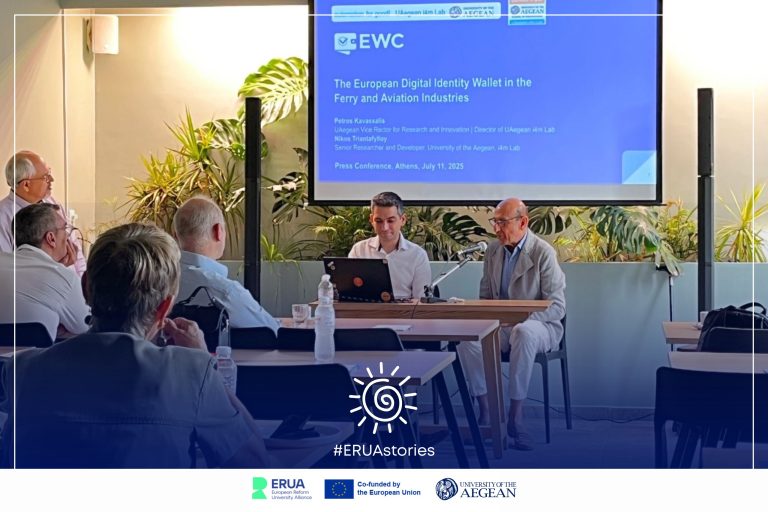
On Friday, July 11th, the University of the Aegean presented the first practical implementation of the European Digital Identity (EUDI Wallet) in the fields of ferry and air transport, during a press conference held in Athens. The presentation was delivered by the university’s i4m Lab (Innovation and Information Management Laboratory) and focused on the real-world benefits this emerging European technology offers to both travelers and transport service providers.
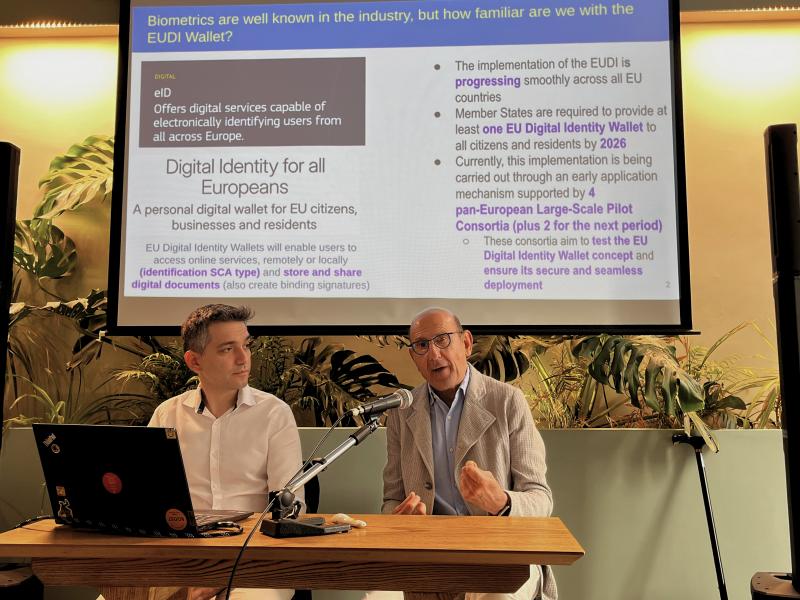
This groundbreaking initiative is part of the broader effort to align with the European Union’s eIDAS 2.0 Regulation, which mandates that all EU member states provide at least one certified digital wallet to citizens and residents by November 2026, with mandatory acceptance by businesses across the EU by November 2027.
What is the EUDI Wallet?
The European Digital Identity Wallet (EUDI Wallet) is a secure mobile application that allows users to store and manage their official identification documents, such as ID cards, passports, and driving licenses — in a digital format. In addition to identification, it enables secure online transactions, digital signatures, and authentication, using cutting-edge Verifiable Credentials technology and Strong Customer Authentication (SCA).
This digital wallet framework offers enhanced privacy protection, data accuracy, and user convenience, opening the door to a safer and more seamless management of personal credentials.
Pilot Launch in Ferry Transport with Fast Ferries
At the event, Nikos Triantafyllou, researcher and developer at the i4m Lab, showcased the first live application of the EUDI Wallet in cooperation with the ferry company Fast Ferries. According to Triantafyllou, the integration of digital identity into the booking and boarding process:
- Reduced wait times and accelerated ticket issuance
- Simplified passenger verification
- Minimized manual data input, reducing human errors and the risk of fraud
“This technology significantly reduces the need for manual entry of passenger data, prevents errors, and enhances fraud protection,” noted Triantafyllou.
Next Phase: Air Transport
Following the successful ferry pilot, the project will now extend to air travel, where the demand for contactless procedures is even more critical. Professor Petros Kavasalis, Vice Rector for Research and Innovation at the University of the Aegean, explained that linking digital identity with biometric recognition allows passengers to complete processes like check-in, security screening, and boarding, directly from their mobile devices, without physical documents.
Key Benefits of the EUDI Wallet
The adoption of the European Digital Identity Wallet is expected to bring multiple advantages:
- Faster booking and boarding through instant digital verification
- Greater data security and protection against identity fraud
- Improved user experience with reduced wait times
- Operational efficiency and cost reduction for transport providers through automation
Strategic Impact for Europe
The University of the Aegean emphasized that the EUDI Wallet is part of a larger European digital transformation strategy. Four major EU pilot projects are already underway to demonstrate the viability and scalability of the technology. The success of these pilots is expected to shape a new standard for the future of mobility across Europe.
“The EUDI Wallet will help define a new model of travel: faster, safer, and user-centric, with Europe leading the global transition to digital mobility,” said Prof. Kavasalis.
Proud Contribution from ERUA’s IT Team

The i4m Lab researchers who lead this initiative are also core members of the IT team supporting the European Reform University Alliance (ERUA). As ERUA, we are proud to count on their expertise, vision, and technical leadership in advancing both the digital infrastructure of our alliance and European innovation as a whole.